
Huangshi is known as the cradle of China’s steel industry. It was home to China’s first modern steel conglomerate—the Hanyeping Company—as well as the country’s first mechanized open-pit iron mine, Daye Iron Mine. Huangshi also saw the establishment of China’s second privately-run cement plant, Hubei Province’s first railway line, and its first publicly listed stock. Industry is the soul of Huangshi.
In recent years, Huangshi has ranked among the top cities in Hubei Province in terms of GDP growth and industrial added value above designated size. The annual labor shortage across local enterprises exceeds 30,000 positions. The city’s robust industrial economy provides fertile ground for the development of vocational education.

Huangshi offers abundant sunshine and natural advantages for deepening industry-education integration. The national elevation of vocational education to an unprecedented strategic level, the city's soaring demand for technically skilled talent, and the extraordinary local government commitment to vocational education have converged to create a historic opportunity. Huangshi has positioned vocational education as a core strategy for industrial transformation, with city-wide efforts mobilized to support its development.
To bolster school development, the city has invested ¥3.3 billion to build a new campus in a national-level development zone. This project is designed to accommodate 15,000 enrolled students, covering 947 mu (approximately 63 hectares) with a total building area of 490,000 square meters. A supportive social environment and a strong system backing the innovative development of vocational education are steadily taking shape.
Huangshi: Breathing Industry-Education Collaboration
Industry-education integration is deeply embedded in the spirit of Huangshi. The people of Huangshi carry industrial heritage in their blood; respect for labor and skilled craftsmanship is woven into the city’s cultural fabric.
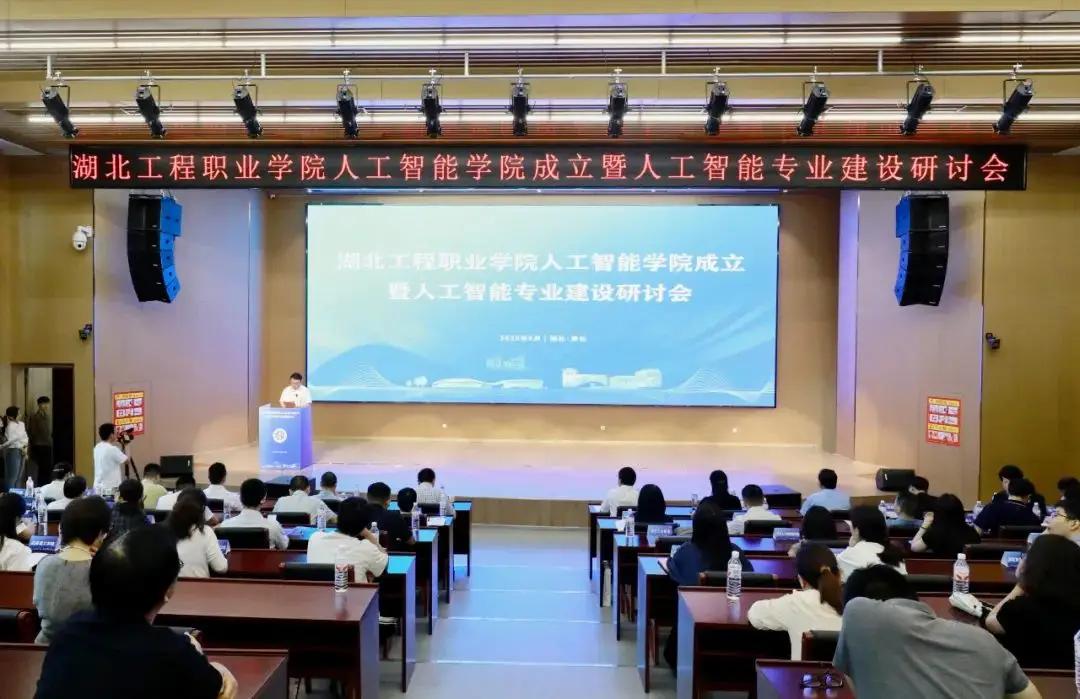
Hubei Engineering Vocational College is actively advancing the integration of teaching and research, industry and education, science and education, and collaboration between school and city. The institution aligns itself with major national strategies such as smart manufacturing and leverages industry-specific resources to build an integrated platform for collaborative education that brings together teaching, training, competition, research, and innovation.
Focusing on cultivating character and strengthening ideological foundations, the college has expanded a distinctive educational approach centered on "whole-domain education, five-color immersion, and virtue-driven excellence in skills." It has developed a specialized curriculum system featuring “position-based courses, dynamic iteration, and joint assessment,” reflecting both vocational characteristics and regional strengths. Through clear role positioning and institutional innovation, the college has established a teaching team model driven by “value leadership, balanced development of three transitions, and dual engagement of schools and enterprises.”
By gathering advantageous industry resources, the college has built a comprehensive six-dimensional collaborative education platform that integrates teaching, training, competition, research, and innovation. In this process, it has pioneered and implemented a new local model for cultivating high-skilled vocational talent under the concept of “Virtue-Driven Skills Advancement.” It has also developed a new practical teaching system centered on “platform empowerment, real-world scenarios, capability progression, and intelligence enhancement,” and formed a government-led collaborative mechanism defined by “industry as the axis, entity-based operations, and enterprise-driven development.”
Implementing the “Virtue-Driven Skills Advancement” Training Philosophy
Grounded in the theory of vocational education adaptability, and with full commitment to fostering both moral integrity and technical competence, Huangshi has firmly taken on the mission of cultivating talent for the nation and for the Party. In collaboration with leading enterprises such as Shengqi Technology and Donper Group, the city has pioneered a new local philosophy for high-skilled talent cultivation in higher vocational institutions—“Virtue-Driven Skills Advancement.”
This philosophy guides both faculty and students to uphold noble virtues, safeguard public ethics, and maintain personal integrity. It focuses on strengthening ideological foundations and reinforcing confidence through moral education, expanding a political-ideological education model characterized by “whole-domain cultivation, five-color immersion, and excellence in both virtue and skill.”
The city has developed a profession-oriented curriculum system based on “position-driven course design, dynamic iteration, and joint assessment and evaluation,” while nurturing innovative teaching teams guided by “value leadership, balanced focus on three key transitions, and dual engagement of academia and industry.”
Through this approach, Huangshi is cultivating a new generation of high-skilled vocational talent with strong national pride, exceptional technical capabilities, a distinct Huangshi identity, and a commitment to industrial advancement. This effort provides robust talent and technological support for the high-quality development of both Huangshi City and Hubei Province.

Building Practice-Based Teaching through Real-World Training Environments
Led by the provincial-level high-level industrial internet program cluster and its flagship "Teaching Workshop," Huangshi has established an integrated practice-based teaching model. This model is supported by regional industry-education integration centers focused on high-end equipment, on-campus open training base clusters such as the XPeng Motors Industry Academy, and off-campus production-based training sites hosted by companies such as Jingpai (Kingpark). Together, these form a synergistic system encompassing “Teaching Workshops + Regional Centers + Industry Academies + Training Bases,” enabling integrated, practice-driven professional education.
Leveraging this platform cluster, the college has partnered with enterprises like Sanfeng Intelligence to develop 15 hands-on training environments, including bottling and intelligent production lines. By introducing corporate “Four Real” elements—real equipment, real environments, real tasks, and real standards—students engage in practical training that mirrors real-world industry conditions.
This approach continuously enhances students' capabilities through progressive stages: laying a solid foundation → developing core competencies by specialization → strengthening interdisciplinary integration → improving transferability through innovation and entrepreneurship. It reinforces theoretical knowledge, sharpens technical skills, and fosters practical intelligence.
Through experiential learning, students are guided to cultivate a deep emotional connection with the city: “Know Huangshi – Love Huangshi – Stay in Huangshi.” This also strengthens patriotic values, reinforces the aspiration to contribute to national strength, and builds a shared sense of responsibility to serve the country.
Establishing a Collaborative Industry-Education Talent Development Mechanism
Liu Hongxia, Party Secretary of Hubei Engineering Vocational College, has put forward the educational philosophy of “Rooted in Huangshi, Driven by Synergy, Integrated with Industry, Empowering Enterprises.” She has distilled practical insights from the school’s experience, emphasizing that “the key to advancing industry-education and science-education integration in vocational education lies in strong government leadership.”
Currently, all academic programs and professional clusters within the college are aligned with Huangshi’s 12 key industrial chains—such as high-end equipment manufacturing—serving as the core axis. This alignment is supported by the city’s governance model of “One Chain, One Chain Leader,” which assigns a lead official to each industrial chain, alongside a lead department and supporting departments across relevant counties and districts.
Driven by institutional innovations like the “Shared PhD” system, and leveraging opportunities such as leading the development of Huangshi’s 15th Five-Year Plan for vocational education, the college is taking a central role. High-level program clusters such as industrial internet lead the way, while the joint construction of 12 industry academies—including smart manufacturing—provides structural support.
This approach enables the college to strategically coordinate with major production projects in Huangshi, such as those led by Wingtech Technology, aligning them with the college’s program clusters. As a result, the integration of policy chains, education chains, and innovation chains is increasingly efficient and synchronized, greatly enhancing both the quality and effectiveness of collaborative industry-education talent development.
Media Contact
Company Name: Guangdong Provincial Institute of Excellent Teacher Education
Contact Person: Lin Ruijue
Email: Send Email
Country: China
Website: https://mp.weixin.qq.com/s/KYBE7DBKbagtkhHg-cmV4Q